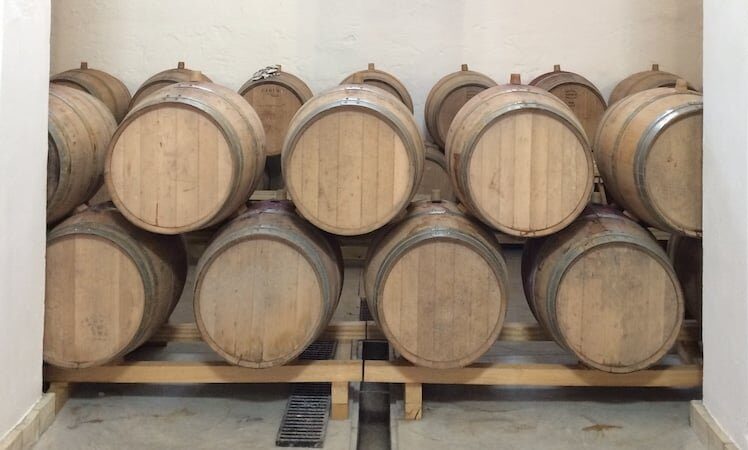
The three basic principles of good winemaking are cleanliness, cleanliness and cleanliness. David is strict about very few things, and cleanliness is one of them. When you work with minimal sulphur in the winery, and you don't want to intervene in anything, and you want to get clean, crisp wines, the aim is to avoid problems. And the only way to avoid problems is for everything to be spotless, clean.
Nothing can be left for tomorrow: everything must be cleaned immediately after use. And the cleaning method is also strict: pressurised water at over 100 degrees. No products. The only thing we use is hydrogen peroxide which we circulate through the hoses and the pump. Caustic soda and citric acid are forbidden in our cellar. They are products that leave wrong messages.
Biodynamics believes in the ability of water to convey subtle messages and in the nobility of certain materials. This is why certain chemicals are avoided, even in the cleaning of tanks. The vignerons The more meticulous ones remove even the chlorine from the tap water to wash their tanks. I have always been amazed at how thorough David can be in his cleaning, demanding that the day after cleaning, we wipe down and dry the tanks inside them so that no dampness remains, which can lead to rotting processes.
But I was even more surprised when, with the same thoroughness, he checks the cleanliness of the materials for the dynamisation of the biodynamic preparations. The pots we use to heat the water and energise it with the biodynamic preparations are made of copper. Copper is an element that transmits energy and is suitable for the use of biodynamics. All these elements must be perfectly clean before use. Without this cleanliness, the messages that we are going to transmit lose quality, and finally, effectiveness.
This is what David learned from Alex Podolinsky, who is the leading figure in biodynamic agriculture in Australia. David always remembers hearing him speak at a conference in France - years later he went to visit him. Alex Podolinsky talked about the importance of the details: good intentions are not enough; you have to do it right. For David, that conference brought about a major change in his practice, and also in his results. Doing it well means having the right water, the right materials, in a state of maximum cleanliness, and doing the energisations well under the right conditions and at the right times. If this is not the case, it is not possible to achieve good results.
So, in the cellar and when it comes to preparations and treatments, the rules are simple and straightforward: clean, clean, clean.