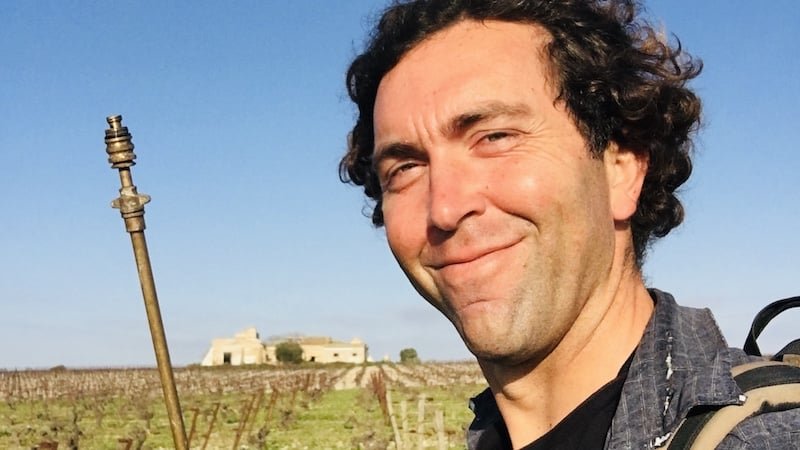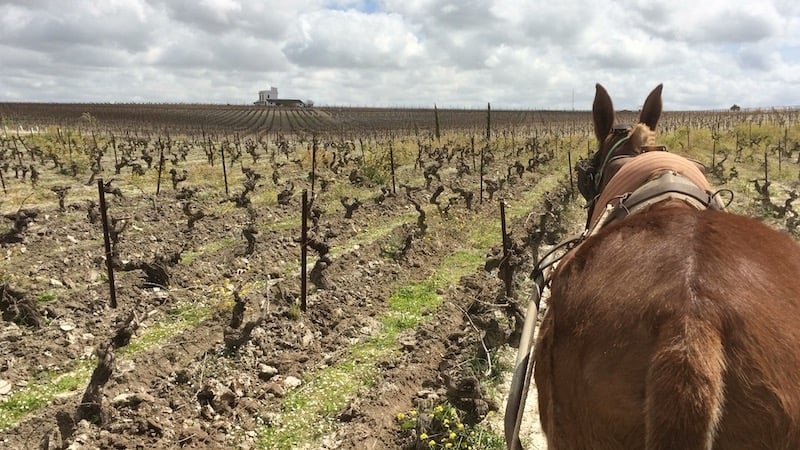
I love to tell this anecdote, because I think it symbolises very well the figure of the “vigneron” that I learn with David. -Vigneron- would be translated into English as viticulturist; however, in French it has another symbolic meaning. In the French wine world, vigneron means taking a step forward, from producing grapes and selling them to a winery, to making your own wine. It is a brave step, a step that requires personality, decision, enthusiasm, and that will necessarily mark the wine you are going to make with your own imprint. The vigneron does not require a great deal of technical knowledge, but rather common sense, good workmanship and sensitivity. And that is why I am telling you this anecdote.
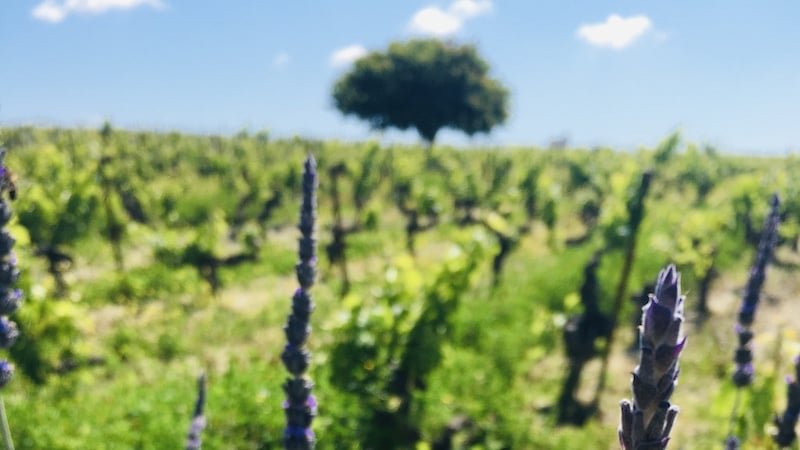
When David and I took a step forward in the creation of Muchada-Léclapart, one of the objectives was to find a plot of vines to buy. The idea we had was to find old vines in one of the historic vineyards of Sanlúcar; nothing more. It was a very broad and general idea. However, I remember the phrase David said to me: “Ale: look for beauty; look for a place that has beauty, that you feel good in. I'm sure it will give something excellent”. It had an impact on me because he didn't tell me to analyse the soils, to study the type of albariza he had, the depth at which the tosca appeared... It was a phrase that directly showed me what I wanted to learn: to feel, to trust intuition, to develop the sensitivity we all have to perceive what surrounds us. And also, to appreciate beauty, to look for beauty as an indicator of excellence, of the future, of the road ahead.
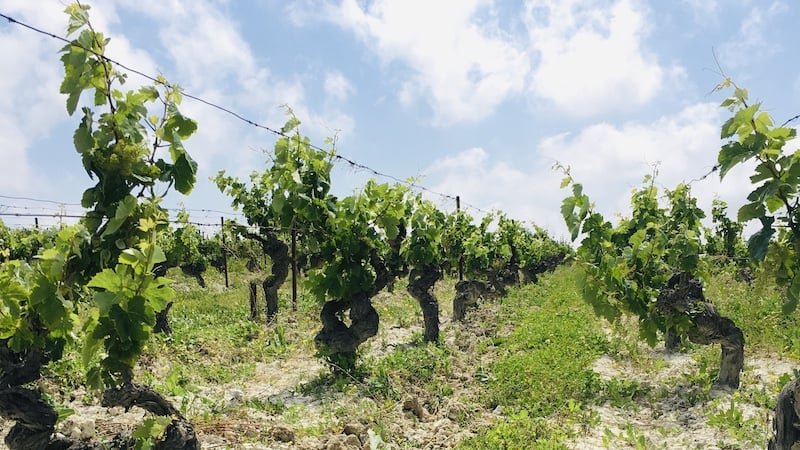
These subtle gestures of David's are the ones that most attract my attention, and most motivate me to want to be a vigneron, French style. It's not about planting chardonnay grapes, or making bubbles; it's about trusting your intuition, your sensibility, the artist in all of us. It was with this attitude that we found our La Platera vineyard. Thanks to good friends, who are always the best filter to come up with something good for you, we found La Platera, a plot of 1.7 hectares, with 1.2h of beautiful old vines.
Luckily David and I were together that afternoon. We were shown several plots, but none of them made us “clín clín”. But when we arrived at La Platera, David and I looked at each other and said: "This is the one...". is. So, without analysing the soils, without prejudice because we were in the lower part of the Pago Miraflores. There was a singular beauty in those vines. Its shape told us that it was a rich soil and that its viticulturist had been very meticulous in his viticulture. The absence of stalks and repositioning also indicated that it was a good soil. It was our plot. Thus began our Lumière wine, our flagship: a dry white wine from the old vines of La Platera, which we made without make-up: without flor, without fortifying, and of course, without correcting its acidity, without additives except for a minimum of sulphur, with spontaneous fermentation.
The funny thing is that three years later, in 2020, after three vintages of working the soils, we did a soil test. Yves Herody, the most renowned geologist in France along with Claude Bourguignon, had come to the region, and we made several calicatas in the most significant plots of several producers in the region -the occasion deserved it-. The surprise was that the soils of La Platera turned out to be beautiful, with a light-white, closed coarse rock at a depth of two metres, which possibly explains the finesse and elegance of our wine.