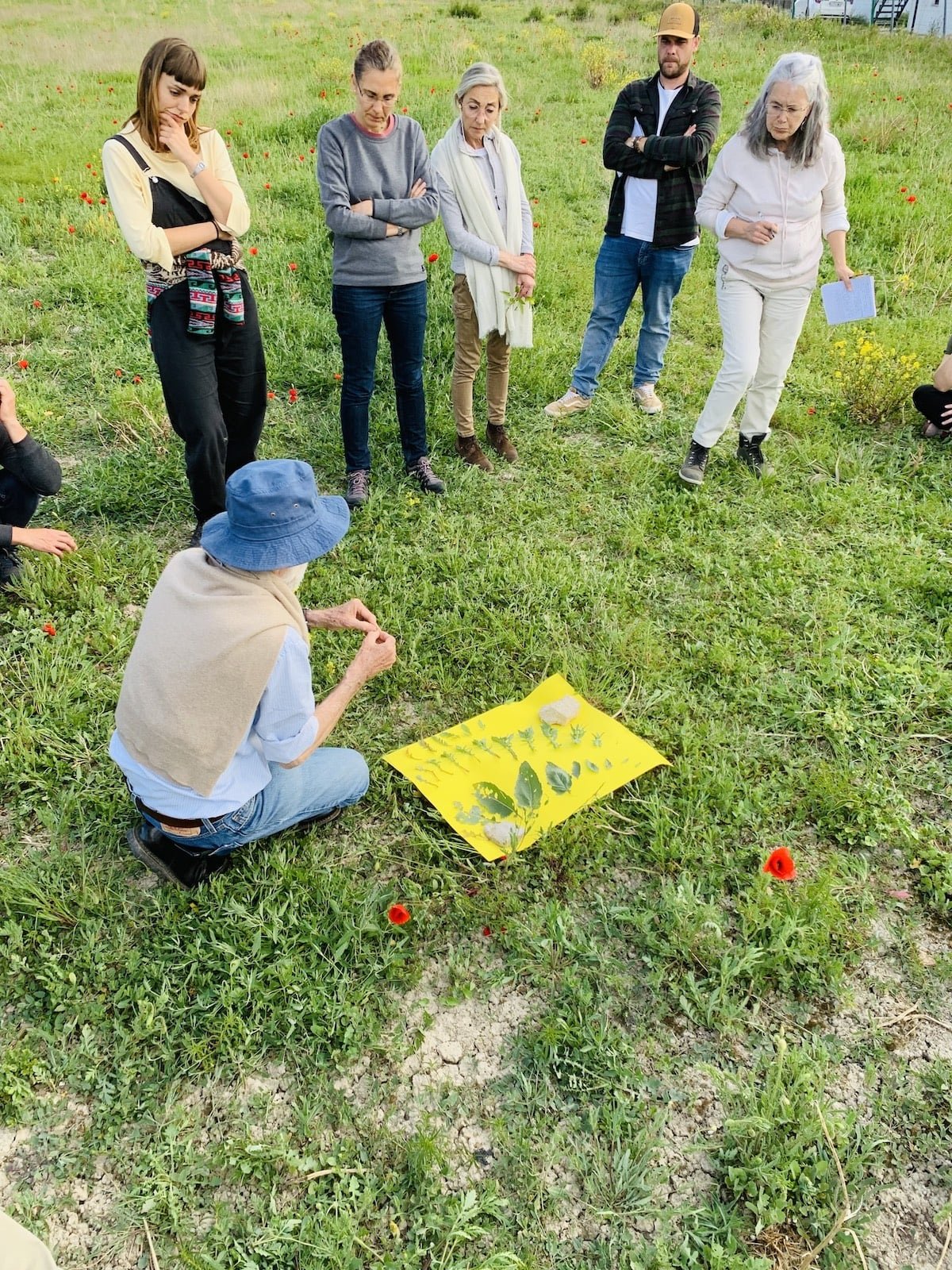
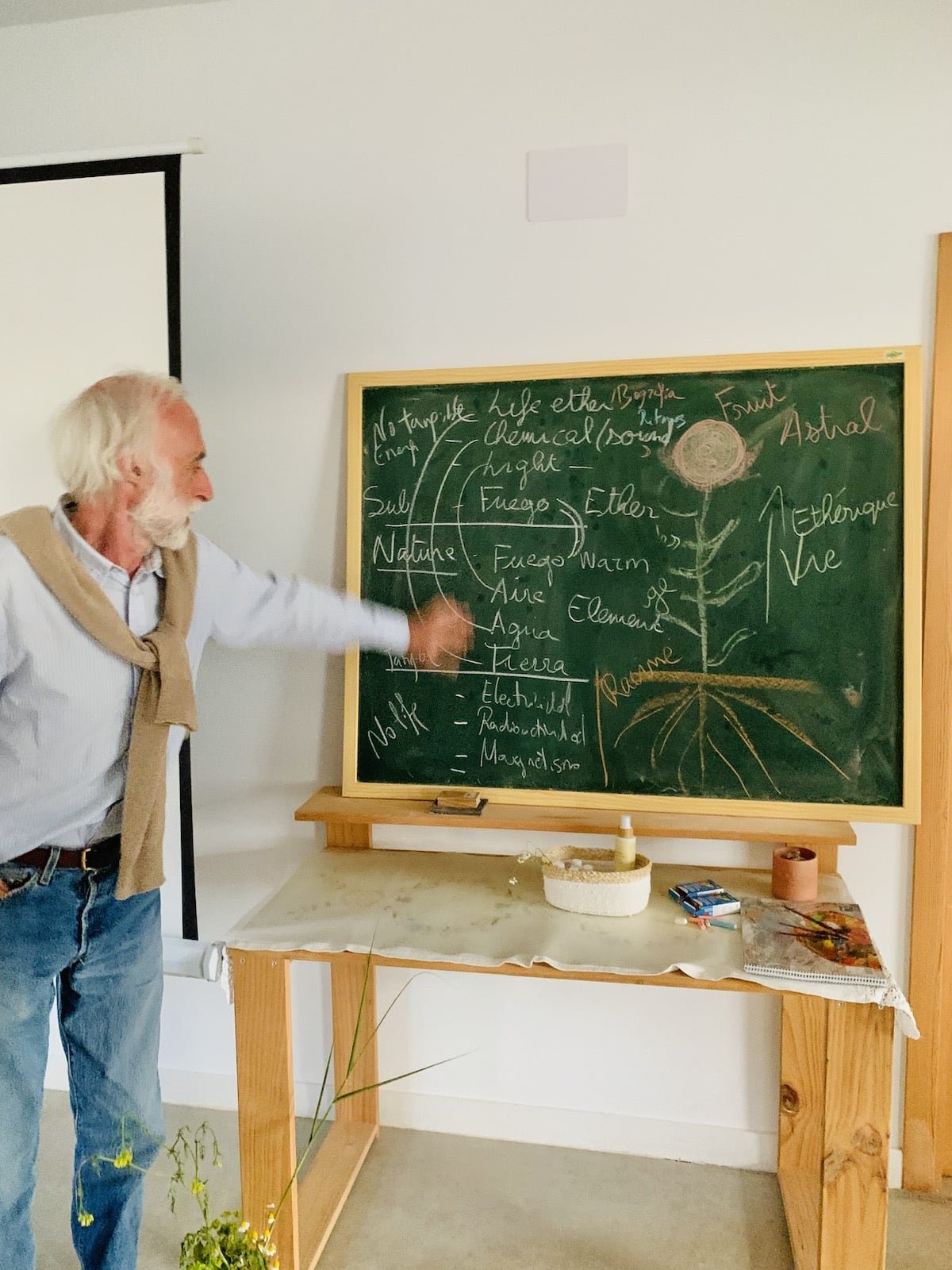
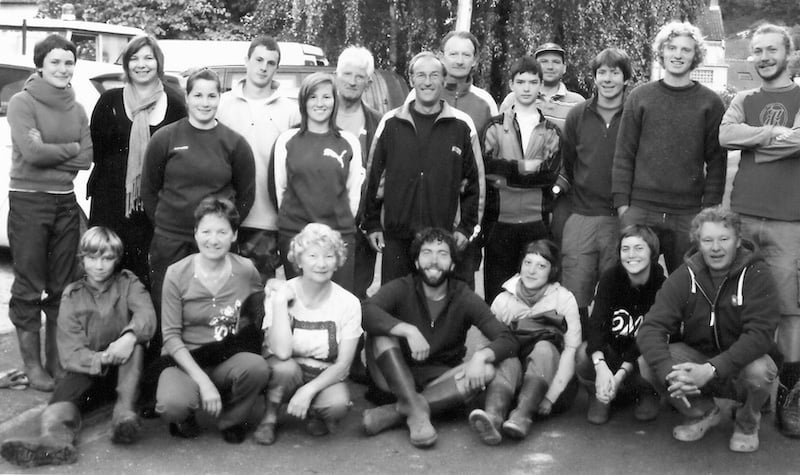
At the beginning of May, the Muchada-Léclapart team took part in a training course on the Goethean approach to the plant world led by botanist Jean Michel Florin, director of the agricultural section of the Goetheanum and organised by the biodynamic farm Entheos, in Lerin (Navarra). We share here some reflections and invite you to go deeper into this topic in the existing bibliography (at the end of the article).
Johann Wolfgang Goethe, the «German Cervantes», the great playwright, author of Faust, developed a unique method of perceiving nature. This was different from the Cartesian materialist method developed by Descartes, Galileo or Newton, which ultimately triumphed in the development of contemporary thought. Descartes' paradigm was based on taking from nature only what was measurable and separable, translating the complexity of a life into the simplicity of a machine. This approach promoted and enabled great scientific and technological developments, overcoming the subjectivity and superstition that had limited human knowledge until then. However, it was also a loss, since it implied separating oneself from nature, in order to understand and dominate it, and reducing the complexity of life to its most material manifestations.
The consequence of this loss has been a human development and science that has understood nature as a good to be exploited, forgetting that human beings belong to nature, and that a separation from it could have negative consequences.
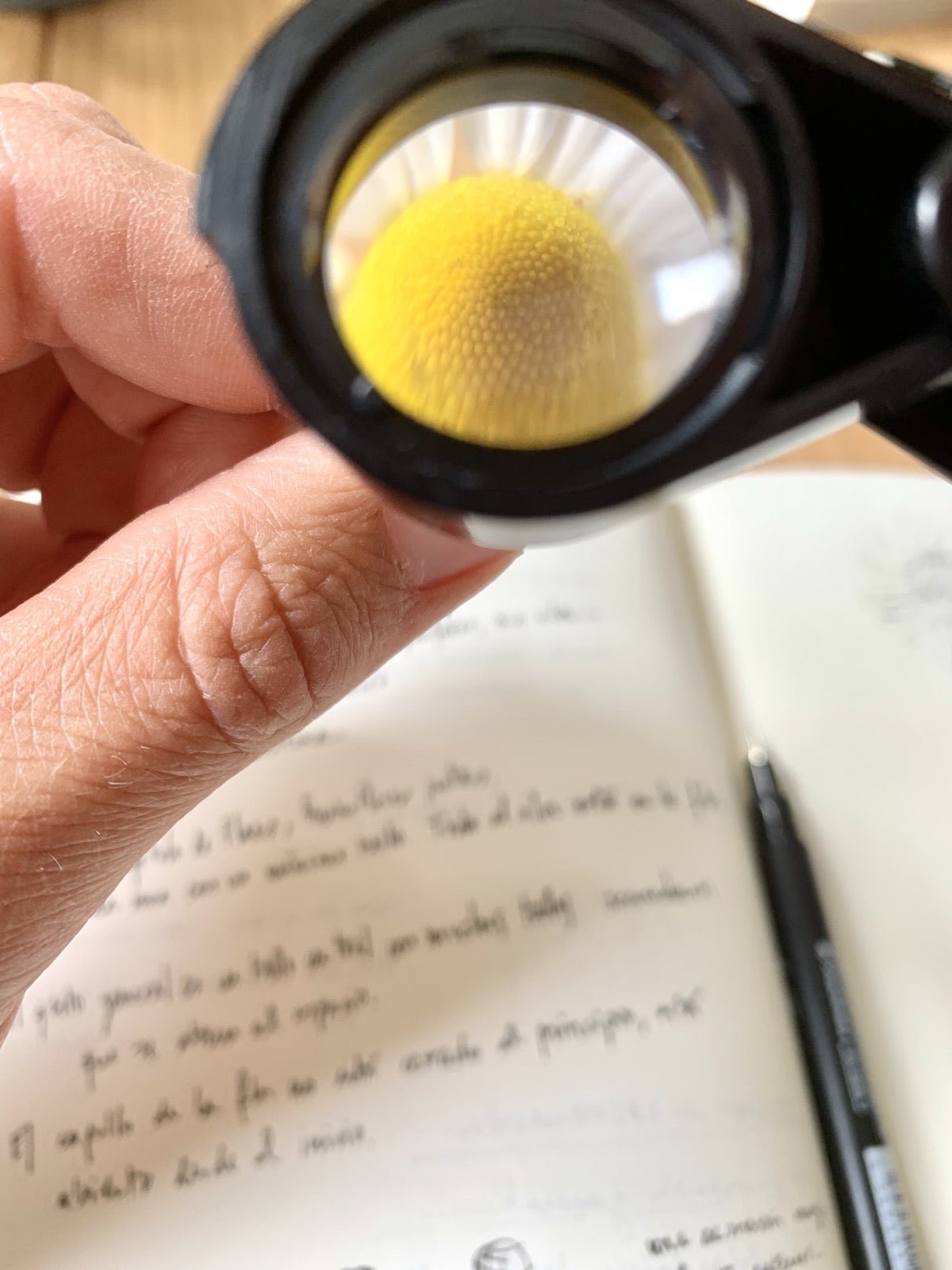
With the triumph of the Cartesian materialistic approach, we have reached a very high technological development, yet we have lost an important and joyful part of living together on our planet. It is as if we have greatly and separately developed the notes of a song, but at the price of no longer hearing the melody. It has also meant giving up trust in the human capacity to feel the melody, externalising that capacity to measuring instruments, such as a microscope.
Perhaps it was a necessary step, to be able to listen to the melody again, consciously and more accurately, and to empower technological development for our good and the good of Planet Earth.
The Goethean approach, as opposed to the Cartesian approach, proposes:
- Enderstanding nature and its phenomena as a whole (and not in parts), including qualitative as well as utilitarian phenomena.
- To trust in the human being's capacity to perceive the environment and the living beings that surround him from his primary senses, his global feeling, his imagination and his intuition.
- Avoid making interpretative theories of natural phenomena, by means of an explanation by deep description of the phenomenon itself.
Goethe was an advocate of the phenomenological approach, aware of the inevitable participation of the observer in the observed, and of the opportunity it offers the human being to attain higher knowledge. He learned this from reading Spinoza's texts and from his experience of art and Italian painters of the 18th century.
In our particular object of study, plants, it means understanding their forms not only as an adaptation to the environment (in the Darwinian sense) but also as a unique expression of the identity of each species and each individual.
Approaching nature and other living beings with a sensitive respect for each identity, each impulse, can mean finding solutions to human needs from a place of harmony with the environment. For example, a thistle plant is not seen as a «weed» but as a bio-indicator of a need in the soil of our crop, with a very precise message of soil compaction or a blocked element. Also observing the thistle qualitatively, and not from a utilitarian point of view, allows us to perceive its own qualities, regardless of our needs, as well as to observe perhaps singular elements of its identity, such as its flowers, and to find possible remedies thanks to them or to reflect directly on the suitability of our cultivation in that particular place.
If we look closely at the complex and unique shapes of a plant's leaves, stems, flowers or fruits, we can understand that their complexity is not only due to adaptation to the environment. If this were the only way, their shapes would be simple and exclusively functional to fulfil their mission in the plant's organism. However, Their beauty, their colours, their unique and complex shapes, speak to us of a purpose, an impulse, an identity, a unique way of being in the world: an inner law of each species.
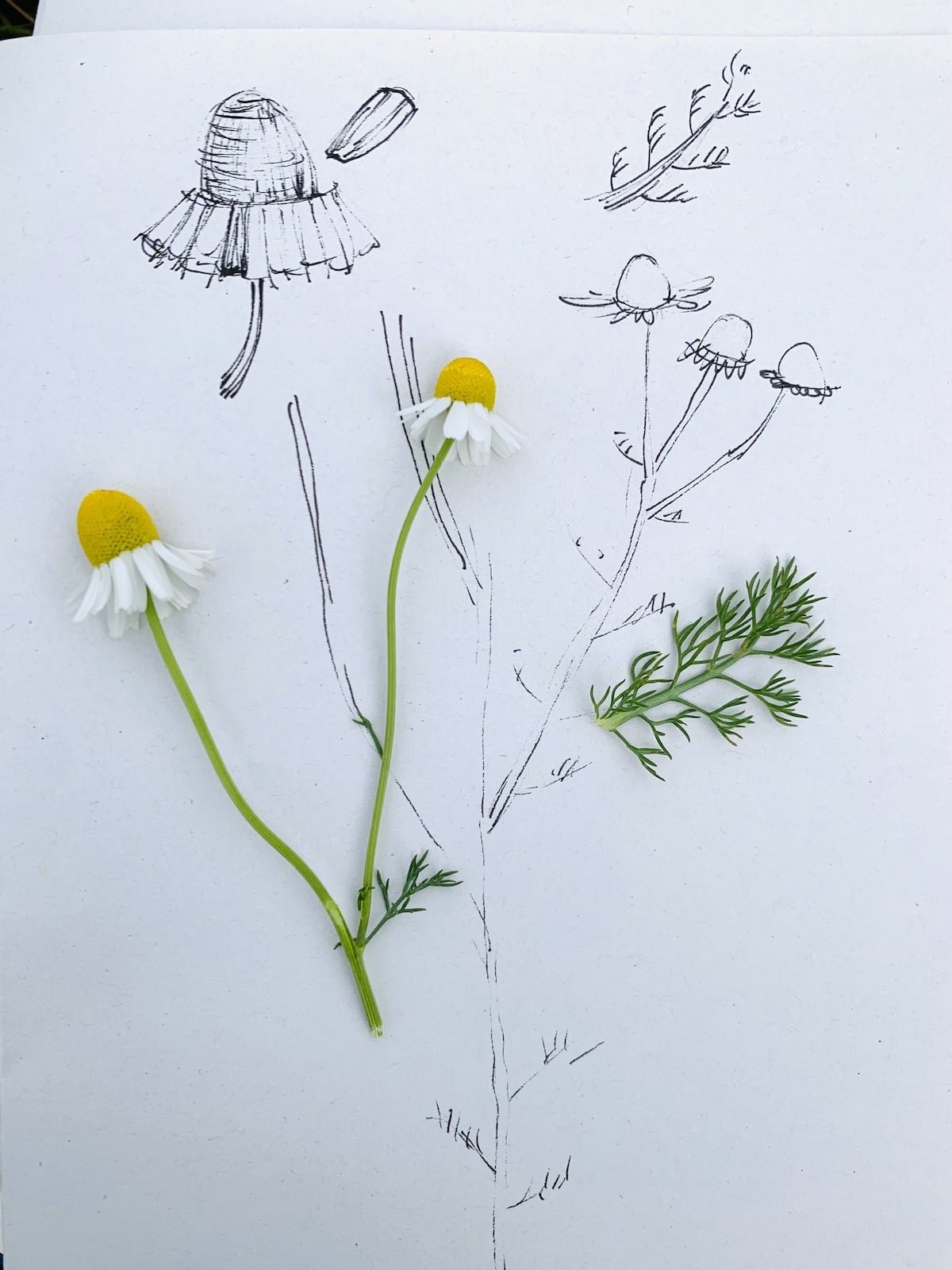
This inner law expresses itself differently depending on the environments in which it can live: depending on the heat or cold, rain or drought, the type of soil, etc... Thus, a camomile plant can have more or less tall stems, more or less large leaves, more or less shiny green. But in all these environments where chamomile can live, the plant will have some unique features that determine it as chamomile, with its semi-spherical, yellow flowers or flower buds, full of pollen, on white petals.
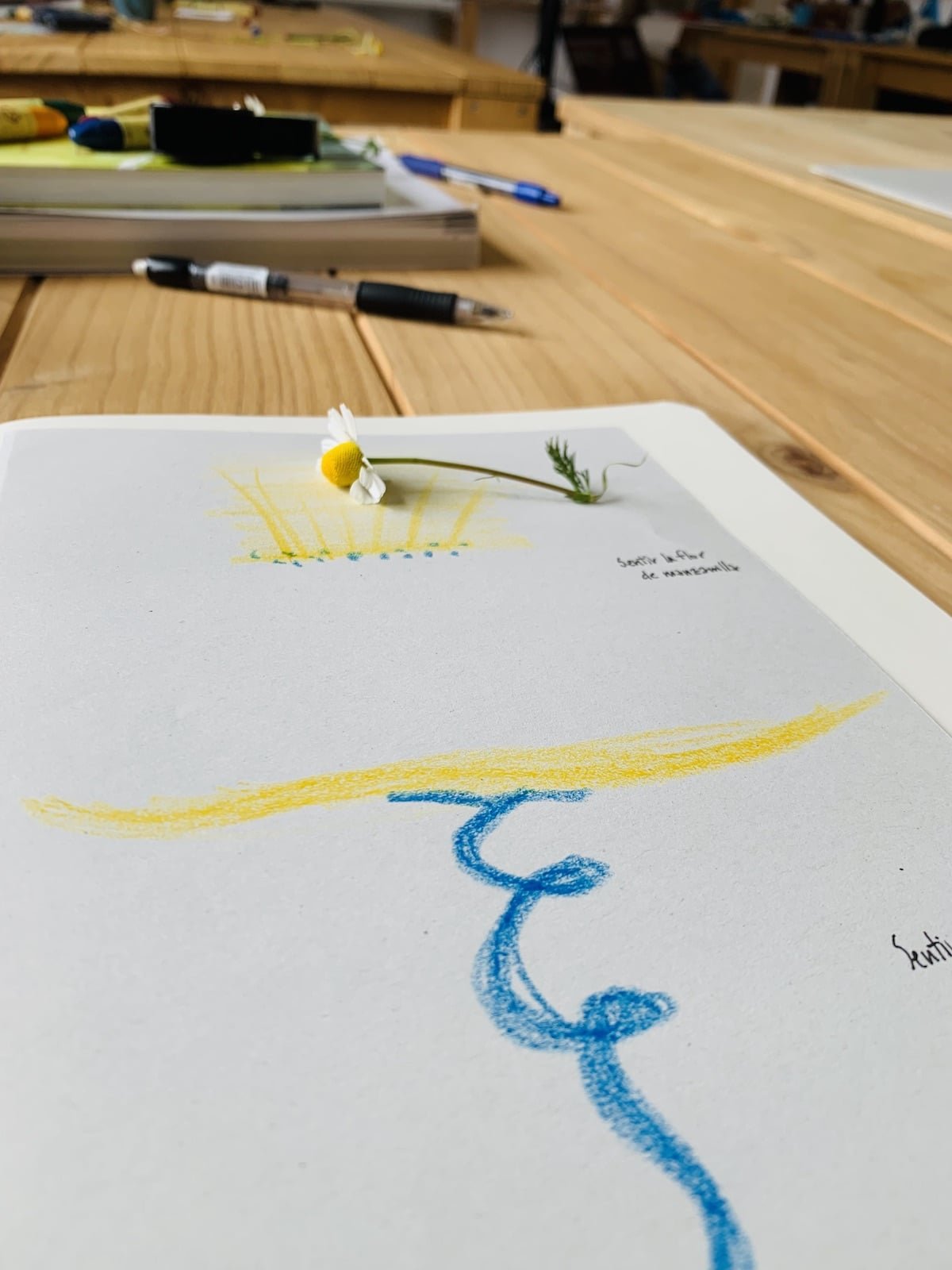
On the other hand, Goethe proposed that life can only be perceived in movement. That the photograph of an instant is not capable of containing the formative forces that drive the plant to grow as it does. An energy that is essential to understand the plant but that is not measurable. However, this energy is perceptible from the compression of the movement (metamorphosis) of the plant. In its growth, from the moment it emerges from the seed until its fructification culminates, like stills from a film, the forces that generate them can be intuited. The problem is that this vital energy can only be perceived from the imagination, from human thinking, which for Goethe is just another sense of perception. By educating this human capacity very well, and carefully calibrating it with the senses of sight, smell, taste and touch, human beings can approach this mystery of life. Goethe argued that thought and perception must be as dynamic as life, otherwise it is not possible to grasp its mystery, i.e. from living being to living being, in a harmonious intellectual breathing, from wholeness to wholeness.
Getting closer to this mystery can help us to find the virtues of plants that humans can use for their wellbeing, such as their medicinal use, or to understand the needs of a crop or the opportunities of a farm. To make a simile, it would be like finding a young Picasso and understanding his way of understanding the world and art. And instead of forcing him to produce a certain style, because it benefits us, we would encourage him to develop his unique and brilliant vision of his painting. That is, by seeking dialogue and collaboration with nature.
But this way of approaching the plant world has a greater gift for humans: it helps to foster a sense of belonging and connection to it. Goethe argued that we can only see what we somehow are, what we carry within us.. We cannot see what we are not. If we did not have an idea of a plant inside us, we would not be able to see it or distinguish it in reality. In other words, looking at the plant world in this way allows us to know ourselves better, and to establish an ethical and joyful dialogue with nature, promoting human development in balance with its environment.
One of the worst consequences of the Cartesian approach has been to confuse human beings into believing that they do not belong to their environment and that they can dominate it for their own use and benefit. This has promoted a model of development that is out of balance with nature and with humanity itself. No matter how much we develop technologically, if we do not change our approach, we will end up in an uninhabitable environment for humans.
We leave you here some bibliographical references to continue learning together:
- Rencontrer les plantes. Jean Michel Florin. Publisher Amyris
- Goethe and his vision of the world. Rudolf Steiner. Publisher Rudolf Steiner
- The metamorphosis of plants. Johan Goethe. Editorial Atalanta
- The theory of nature. Johan W. Goethe. Editorial Tecnos
- Nature as totality. Henry Bortoft. Editorial Atalanta
- https://www.bio-dynamie.org/biodynamie/presentation/approche-goetheenne/#