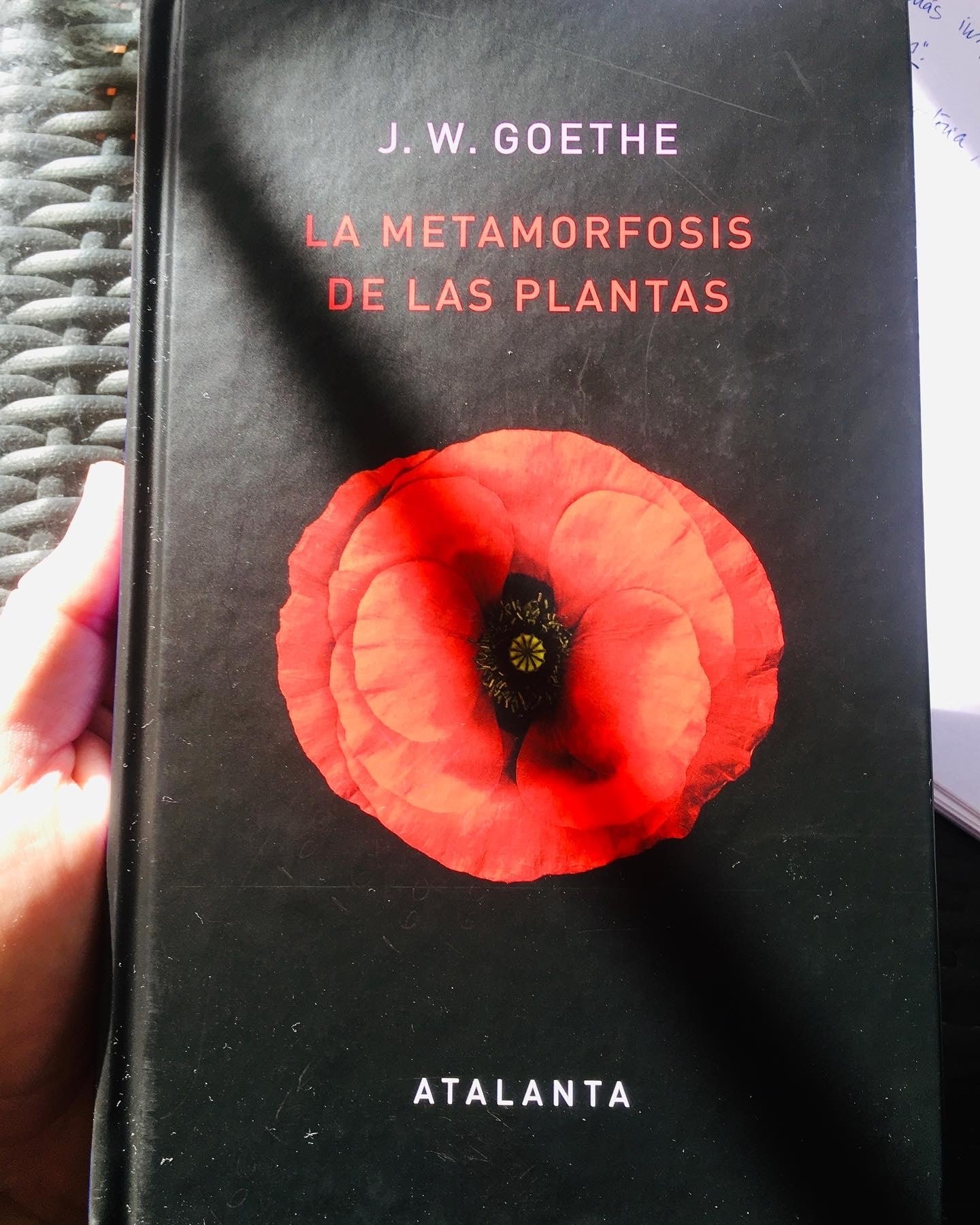
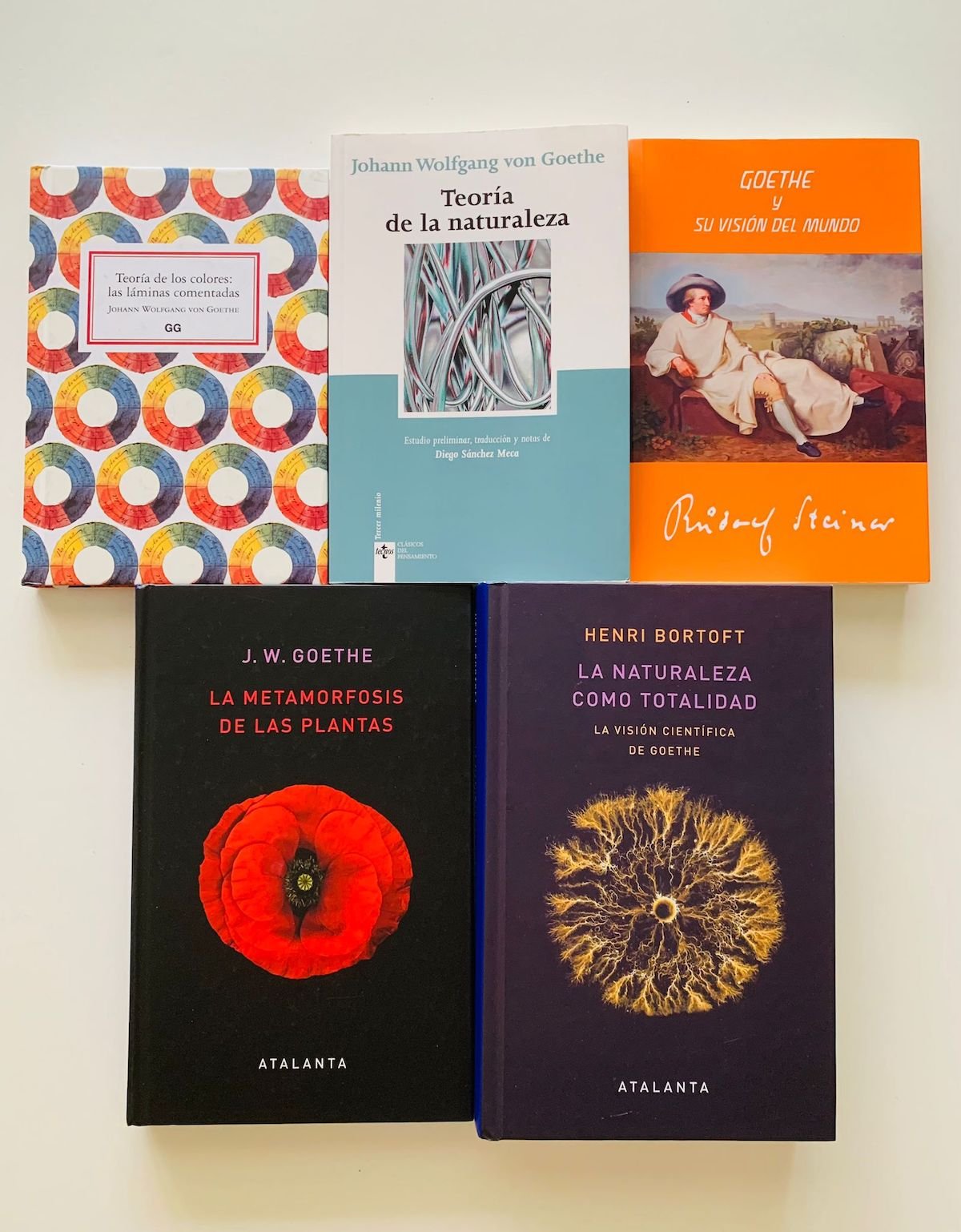
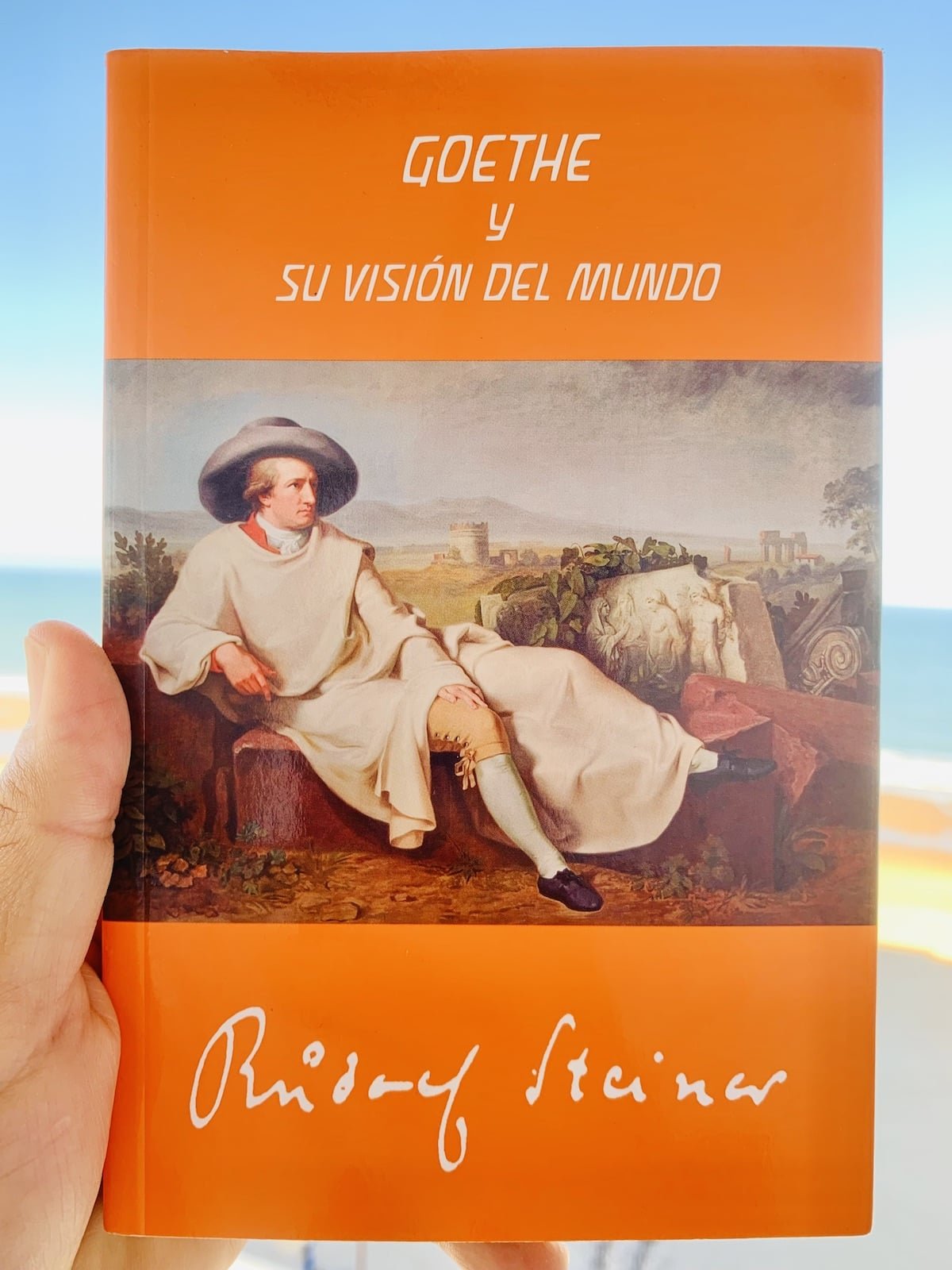
Rudolf Steiner, the father of biodynamic agriculture, worked for several years in Johan Goethe's archive in Weimar, studying his scientific writings, which had not been analysed as a whole. Goethe is the great German playwright, the “German Cervantes”, but he also produced an important scientific work, based on different paradigms. Thanks to them, Steiner got a great inspiration for his work and for the development of his Spiritual Science.
When Steiner gave the lectures on biodynamic agriculture in 1924, he was already at the end of his life process and had developed his writings and his worldview extensively. In the lectures on biodynamic agriculture, Steiner states that his approach is: What can Spiritual Science contribute to the agriculture of that time? Where they had already begun to sense and detect changes in foodstuffs due to the use of chemical fertilisers and herbicides. Steiner was 15 years ahead of the first organic farming theories.
The question we are asking here is what in these courses came from Steiner's Spiritual Science, and what originally came from Goethe's vision (without this differentiation implying a confrontation between the two visions, but simply a questioning of the origin or source of biodynamic agriculture).
In fact, the very name “bio-dynamics” comes from a Goethean concept: observing the dynamics of life; observing the living as opposed to observing the inert, the dead, the separated into parts.
Goethe had a different way of looking at natural reality: on the one hand, he incorporated the movement, the “dynamics” of life. He wanted to incorporate the impulse of living beings, something that the usual “static physiology” of botany does not capture. For him, the transformations of individuals and species are not only the result of an adaptation to and relationship with the context, but are also the result of the "dynamics" of life. the physical expression of an inner drive, of a life purpose of each individual, species, place, entity.
On the other hand, in the observation-understanding of the natural world, Goethe did not want to separate the observed object from the observing subject, because for him, this simplification left behind much of the knowledge that can take place. For him, the observer, in this case us, is in a certain sense part of the observed, and vice versa. In such a way that a profound knowledge of the natural world can only come about methodologically, through the integral connection of the observer and the observed..
This method of the observer's participation in the observed leaves the door open, not only to the transformation of our feeling in observing and belonging to nature as farmers, but allows other kinds of knowledge to flourish, if they exist at all: like the ancestral wisdom of our infinite “being” that contains everything, and among them, the nature we observe, and of which we are the seeds.
In a way, when we observe, we see the plant in us, for we are one, and in a way, we contain the plant and the knowledge we can create from it.
Goethe's method was discarded and criticised for the “modern” aim of taking over nature and technically mastering its processes, as it had no practical consequences and complicated the process of understanding. Modern science preferred to confine itself to the external behaviour of phenomena and the establishment of quantifiable relationships between them. Today, however, we are perhaps already in a position to combine both methodologies, and to incorporate music into reason, intuition into thought, poetry into modern science, in order to achieve a superior knowledge.
Goethe did not achieve results relevant to the interests of his historical context, nor did they represent a paradigm shift. It took more than a century for Rudolf Steiner to build an application in the field of agriculture, with the courses he gave on Biodynamic Agriculture in 1924, developing the first intentional method of organic farming, in response to the loss of quality in foodstuffs due to the use of chemical fertilisers.
Steiner observes life, plant dynamics, spirit in matter. Steiner observes the intention, the creative forces to understand the necessity and identity of each species.
This way of seeing, together with the Goethean idea that in nature there are always “pure” expressions of phenomena, leads Steiner to understand that there are a number of common plants where the basic elements manifest themselves, associating chamomile, nettle, horsetail, etc. with the basic elements: sulphur, calcium, silica, etc. This allows him to design simple tools for farmers to use these plants for soil fertility and crop care.
From this general approach, Steiner manages to translate Goethean observation into very specific practices, such as the preparation of preparations or compost.
Spiritual science and other inputs lead Steiner to conceive in a pioneering way beyond what Goethe put forward in his writings:
-The different bodies existing in a plant (physical, etheric, astral and spiritual body) and their link to the basic elements: nitrogen, sulphur, potassium, etc.
-The influence on plants not only of the moon and the sun, but also of the planets, as well as the consideration of seasonal rhythms and the natural rhythms (plant, terrestrial and cosmic) involved in agriculture.
-The importance of soil microbiology and preparations and their promotion through the use of macerations.
-The interaction of the subsoil, earth and sky with the plant through forces linked to basic materials such as silica, clay or calcium.
All these principles Steiner translated and related them to specific agricultural practices. He brought literature and mysticism down to the daily actions of farmers.
His research could basically be summed up as how to replace synthetic fertilisers with natural fertilisers from the local plant and animal world, and how to give a “plus”, a higher material and spiritual quality to foodstuffs.
On the other hand, in its practical proposals, Steiner seems to draw from ancestral practices such as macerations, incinerations and energisations., It is not clear from what sources he drew beyond spiritual science and his way of attaining higher knowledge (in his book “How to attain higher knowledge” Steiner sets out various preliminary exercises which are very much in line with Goethe's proposals). However, it seems that the connection to India of the Theosophists (to whom Steiner belonged) or his peasant experiences in his childhood and youth, may also be clues to be considered as to the origin of his approaches.
Subsequently, biodynamic agriculture has developed and experimented with Steiner's approaches, gradually acquiring a well-defined methodology. There is now a bibliography that is of great help in understanding how to make biodynamic preparations, and the use of plants to heal plants, and research is being carried out to observe material results of these practices. However, the vast majority of biodynamic farmers are unfamiliar with Goethe's work and have not developed the ability to observe the plant world as Goethe inspired Steiner.
After reading Goethe's scientific writings, and the development of Goethe's vision of the plant world, the need arises again to go back to the origins, and to acquire the human capacity that Goethe was trying to promote: to learn to observe the living, the mystery contained in life. To incorporate poetry, imagination and intuition into scientific thinking and daily agricultural practice, as two indivisible and mutually reinforcing sides.