I do not know at what point the Palomino grape was vilified. I suppose it was in the 1970s when chemicals and tractors came into the vineyards of the Marco del Jerez. This caused the production per hectare to triple - because Palomino is a variety that can be very productive - and so it inevitably lost its intensity and character. From that moment on, they began to say that it was a “neutral” variety, but as my partner David Léclapart says, it was a "neutral" variety, “It is not that Palomino is a neutral grape, it is that any variety in the world at 20,000 kilograms per hectare is neutral”.
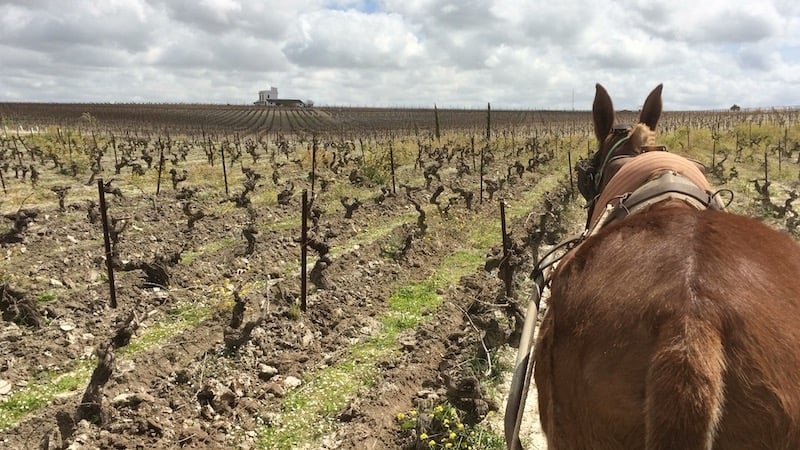
Thanks to the introduction of rotavators and tractors (previously all the land was tilled by hand), the use of herbicides and chemical fertilisers, the average production of a hectare of palomino grape vines on albariza soils increased from 5,000 kg/hectare to 20,000 kg/hectare. The great VORS Sherry wines over 40 years old that we drink today were made from a highly concentrated palomino grape, the fruit of respectful, organic and handmade viticulture, which was the way of the past.
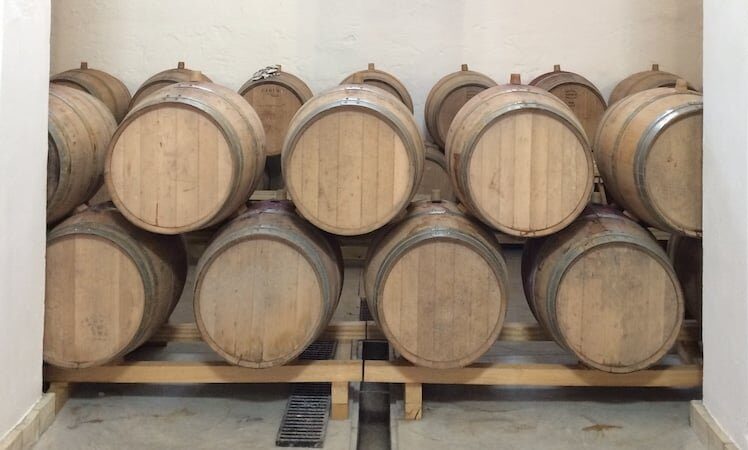
In addition to this process of change in viticulture, there was also the economic crisis of the time -one of many-, which forced the large wineries to sell a large part of their vineyards. Inevitably, this meant a before and after because, in order to maintain their power, the winemakers had to start defending that the value of the wine was in the cellar; that the Palomino grape had no value in itself, and that for this very reason the velo en flor and the complex system of criaderas and soleras were so necessary.
What was actually happening was that these winemakers were forgetting the inheritance they received from their parents and ancestors; a wisdom of enormous quality and that was based on a very well worked vineyard, without large productions and on a system of criaderas and soleras that each winery adapted to its terroir and vineyards.. The personality and identity of their wines came from this relationship/connection.
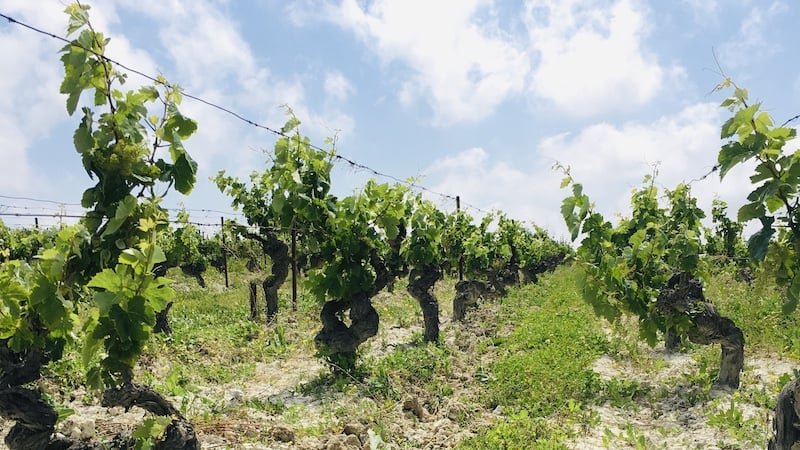
The Palomino grape, well worked (no rotation of soils, no use of chemical fertilisers, no herbicides, no pesticides). it is not neutral. It is subtle, mineral, elegant, saline and persistent. A unique grape, capable of lingering in the mouth with a kindness and at the same time a marvellous grip. Here, in the Marco del Jerez, it is particularly well suited to the calcareous soils of Albariza, conveying like no other the calcareous and Atlantic purity of this place. In fact, without going any further, at the end of the 19th century, many regions of the world took it and planted it to imitate Sherry wines: Australia, California, South Africa and other Spanish regions such as the Canary Islands or Galicia. It was then one of the moments of splendour of the Marco de Jerez, where the Palomino grape had already been massively selected and adapted to our Atlantic climate and to this Albariza land for several centuries. In fact, there is documentary evidence of its presence in the Marco de Jerez since the 11th century, and it may have been here for much longer.
There are also many types of Palomino and selected clones that can be differentiated (California, 84, Pelusón,...), and many types of rootstock (161, Ruggeri, Colombar,...). All of them have different behaviours that are reflected in the wine. For us, the best Palomino grape is the Palomino Fino Antigua, of massal selection, that is to say, coming from the activity of the winegrowers, who selected among their best vines, the wood that they were going to graft in the replacements and in the new plantations. This practice, repeated for decades and centuries, generated a very rich genetic diversity, and a harmonious palomino adapted to the environment. These vines are currently only found in the remaining plots that are more than 50 years old. The 85% Palomino planted in the Marco de Jerez is of the California clone, a clone selected and reworked at the University of Davis (California), which is very productive, as well as having very large clusters and a disproportionate amount of grapes in relation to the leaf surface.
Thus, not all Palomino grapes from the Marco de Jerez region have similar characteristics.; There are different qualities among them. The rootstock also has a great influence on the behaviour of the plant and the characteristics of the grape. In the Sanlúcar area, for example, 161 has always been used, a very subtle and elegant rootstock, which does not produce much wood, and which presents a harmonious relationship between leaf surface and quantity of fruit. Inevitably, grapes from this rootstock will produce a wine with the same identity. There are other more productive rootstocks, which produce a lot of vegetation, such as Colombar or Ruggeri, which have been used for more clayey soils as they are more vigorous and adapt better, but there are those who have planted them in albariza soils looking for a higher production.
Planting is also a moment that marks the subsequent development of the plant. The old vineyards that were planted by hand were meticulously carried out by making large boxes. The rootstock was planted in these boxes and left to grow for two or three years before being grafted with palomino grape wood of massal selection. The palomino grape plant was slowly trained and began to produce after two or three years. The winegrowers had the principle of “first the plant, then the grape”.”. This allowed the plant's roots to develop enormously, which inevitably influenced the quality of the fruit over the years. Nowadays, the process is done mechanically, with the plant already grafted from the first moment, coming from the nurseries, and which is put into production in the first or second year.
Therefore, not all Palomino grapes from albariza soils have the same quality: will depend on its genetic material, its planting process, the rootstock used and the viticulture that takes care of it.
With this in mind, I am very happy that in Eric Asimow's latest article for the New York Times, of the 10 Spanish white wines he has selected, four are from Palomino or Listán (which is the same grape) and that it is ours, the one from the Marco de Jerez, which has been massively selected by winegrowers over the last five centuries. Also in the March Decanter magazine, which is dedicated to Spain, we see the wines selected by journalists such as Darren Smith, which come from Palomino or Listán grapes, such as our wine Lumiére.
It is time to give the Palomino the value it deserves, out of respect for viticulture and the vineyard, and out of respect for the generations and generations of winegrowers who knew how to select it and adapt it to the terroir of the Marco del Jerez, unique in the world.