After two very dry autumns (2018 and 2019), we have finally enjoyed some rainy weather. The vines needed it to recover and be more vigorous. As we often say, in dry farming the most important thing, water, does not depend on us; it depends on the sky. And that, although it makes us suffer on many occasions, has something transcendent, and teaches us humility and acceptance.
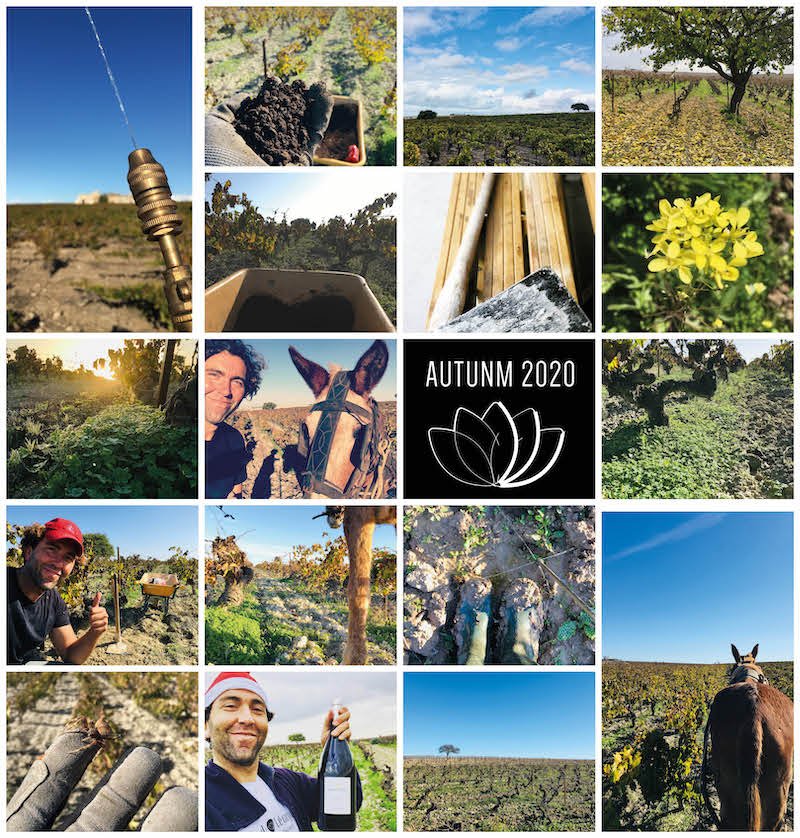
For our part, we have taken advantage of the autumn to encourage soil life. Autumn and spring are the periods when the soil activates its life-giving process, taking advantage of the mild temperatures. The more lively our soils are, the greater the vine's capacity to compensate for the forces of light and heat of spring and summer, and the greater the balance we will have in the grape and, inevitably, in the wine.
To encourage soil life, on the one hand we have tilled, kneading the soil at the times it needed, sensitive to its rhythms, as if we were bakers, to encourage its sponginess, which provides the air gaps (oxygen, nitrogen and other elements) that microbiological life requires.
On the other hand, we have made contributions to compensate for the grapes that we remove during the harvest: we have applied the biodynamic preparation 500P on two occasions, and biodynamic compost from organic sheep and cows, but in small quantities (1000 kg/h); always with the idea of feeding the soil and not feeding the plant. We don't want the vine to get comfortable and to look for what it needs by itself.
We have also applied a nettle slurry to the soil, to encourage root development and help the calcareous albariza soils to release iron and prevent chlorosis - which is a very common pathology in our soils - from appearing.